Dr. Semuhi Sinanoglu
Portfolio 02

Business, authoritarianism, and democracy

Under which conditions does the private sector safeguard democracy and challenge autocrats? Which interventions are effective in changing firms' attitudes and behavior? How do autocrats politically control the business elite? These questions run through this portfolio. I study how autocrats shake down their business allies during economic crises, and how a large private sector that is not dependent on the state is crucial for maintaining democracy.

8 outputs · all portfolios · the wall
Initiative
#DEMCOR · 2025-28 · IDOS

Corporate Civic Responsibility in Safeguarding Democracy

What moves private companies to safeguard democratic institutions and practices when they come under pressure? Where democracies erode, the private sector can act as a counterweight. Firms can sustain independent media, support civic participation, and lend their weight to electoral integrity. Yet we lack systematic evidence on when and why firms shift from acquiescence to engagement, especially during periods of heightened political risk stemming from democratic erosion and autocratization. The project aims to develop a comprehensive database of business-led pro-democracy initiatives and to assess the effectiveness of different cues and nudges in convincing firm managers to take pro-democracy action.

Project page →
Research lines

Business elite in autocracies and democracies

Autocrats and their business allies

Autocrats can politically co-opt businesses with material quid pro quo and without power-sharing arrangements. That is why they can shake down their business allies during severe crises. And despite such repression, the co-opted business elite rarely defects from the regime, because it would lack the public support and legitimacy to do so. There is a hidden and serious cost of co-optation for businesses.

Business role in safeguarding democracy

Businesses face increasing stakeholder pressure to support democracy. They are funding corporate civic responsibility initiatives to protect democratic values such as electoral integrity, civic participation, diversity, good governance, and public-interest media. In addition to principled support for democratic institutions, commercial interests have also motivated businesses in a number of countries to oppose populist trade protectionism, internet shutdowns, and foreign agent laws. Yet we lack systematic knowledge about when, why, and how corporations engage in pro-democracy action. Structurally, such engagement is only possible in societies where the private sector is large and independent enough.

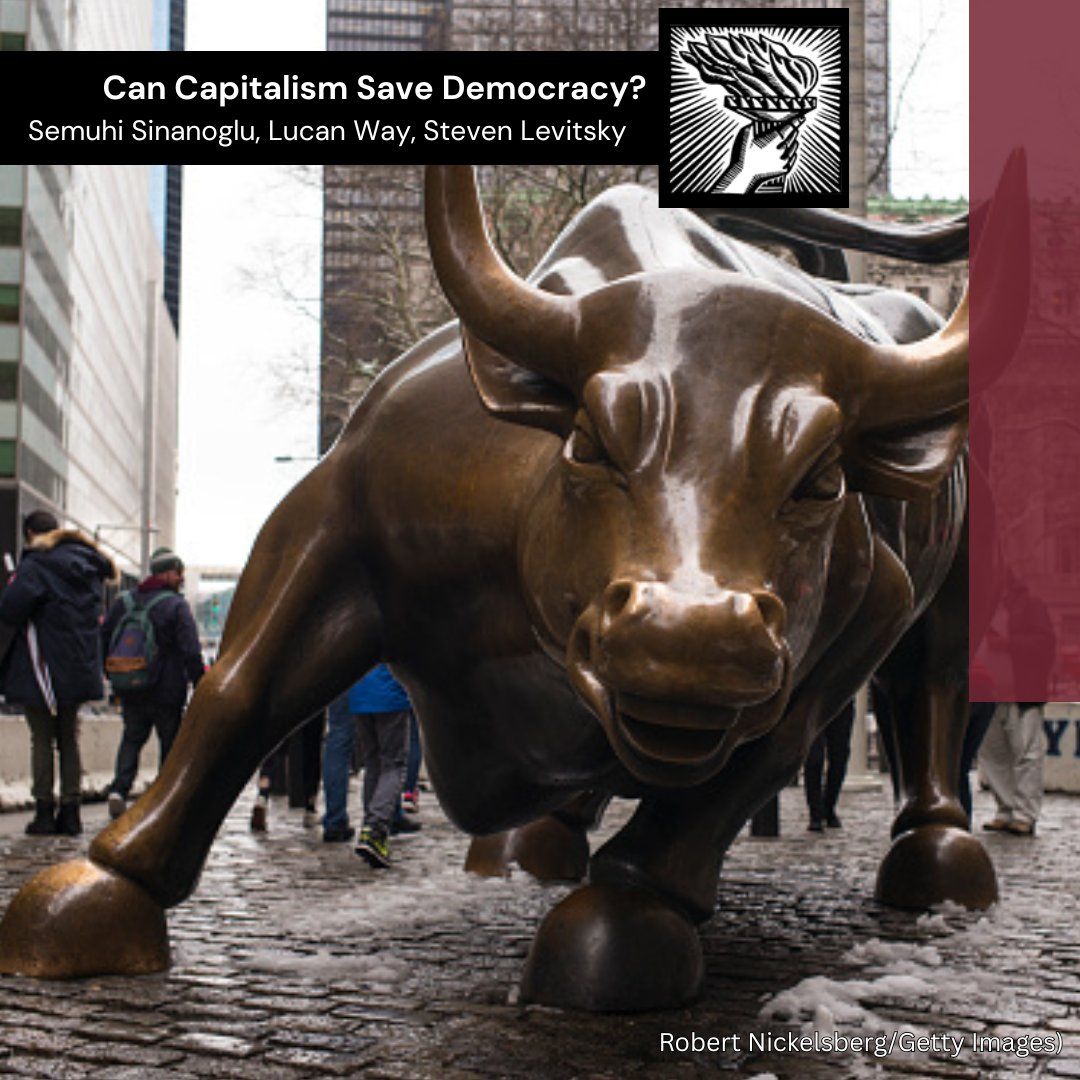
Peer-reviewed Can capitalism save democracy? Journal of Democracy 36(3) 2025
Playable finding
From the business portfolio

Which tycoon does the public want audited?

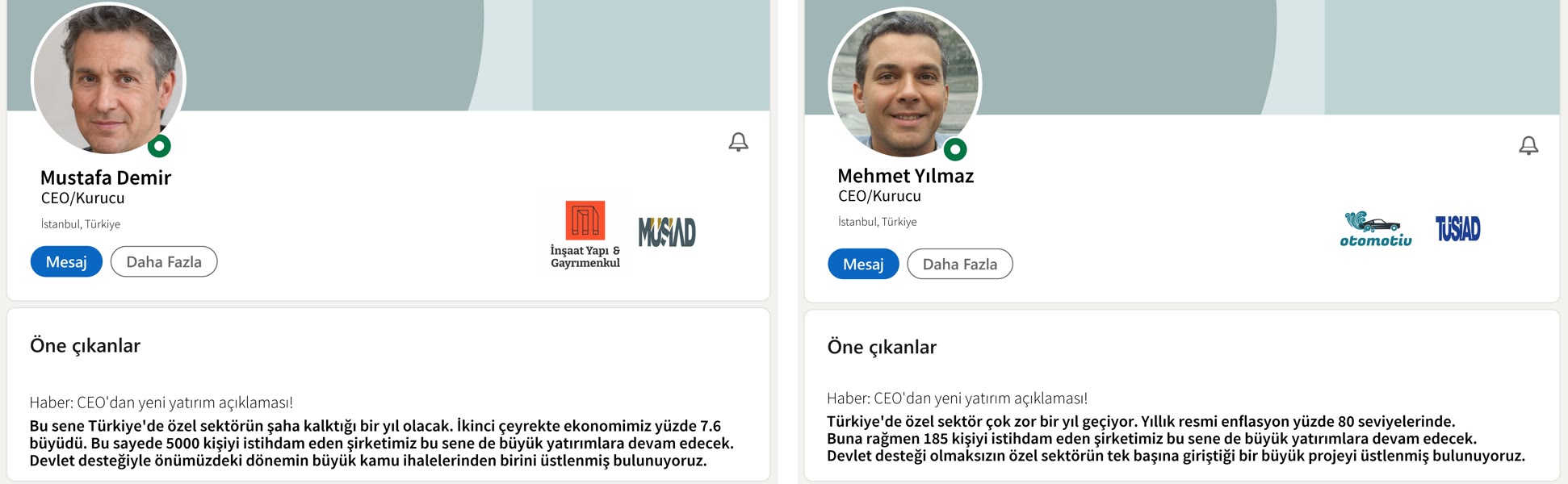
Autocrats levy extraordinary tax fines on businesses, and citizens often approve. In a pre-registered visual conjoint fielded in Turkey in late 2022 (N = 1,732), respondents saw pairs of LinkedIn-style profiles of businesspeople and chose which one the government should hit with out-of-ordinary audits and extra fines. Assemble a profile and watch who draws fire: public contracts and large firms raise the appetite, and construction, the sector cronyism built, is the favorite target. Carmakers get a pass.

Read the working paper →
Two AI-generated LinkedIn-style profiles from the visual conjoint: a construction CEO with a public contract and MÜSİAD membership, and an automotive CEO with TÜSİAD membership
PREDICTED FROM AN ADDITIVE OLS MODEL OF THE VISUAL-CONJOINT REPLICATION, NO INTERACTIONS · RESPONDENT-CLUSTERED 95% CI · TURKEY, NOV–DEC 2022 · 1,732 RESPONDENTS · 3,258 PROFILE RATINGS
Highlights

Recent highlights

Browse all 4 highlights from this portfolio →

Field notes

Latest posts

JUN 2026 · LINKEDIN

Last week, I was in #Belfast for the #EPSS2026. I presented our ongoing work with Lucan Way and Steve Levitsky on how resource concentration leads to autocratic durability. We show that there is one common thread across durable #autocratic regimes that are quite diverse in institutions, wealth, and culture: whether resources are concentrated in the hands of the state. When they are, it is difficult for the #opposition to mount an independent challenge against the regime, and easier for the government to divide, demobilize, and co-opt the opposition.

Read on LinkedIn →
JUN 2026 · BLUESKY

On your way to Belfast for #EPSS2026? Need help finding a panel you'd regret missing? I got you! Join us today! @thenoahbuckley.bsky.social @sukaynayk.bsky.social @rikhilb.bsky.social @amjaime.bsky.social @skaaning.bsky.social @epssnet.bsky.social @lucanway.bsky.social @idos-research.bsky.social

Read on Bluesky →
APR 2026 · LINKEDIN

More to come for the German-Canadian partnership in development cooperation! We hosted Santiago Alba-Corral from the International Development Research Centre (IDRC) at the German Institute of Development and Sustainability (IDOS), where we discussed a wide range of topics, including democratic governance, trade, and science communication, and explored potential avenues for collaboration. I hope that our conversations will move forward on two fronts (among others): the role of the private sector in democracy protection, and reforming development cooperation for agentic AI.

Read on LinkedIn →
APR 2026 · LINKEDIN

Spent last week in #Oxford at the Political Studies Association (UK) conference, presenting ongoing work with Lucan Way and Steven Levitsky on how state resource concentration keeps authoritarian regimes in place. One implication of our findings for #democracy support is that it requires addressing the concentration of economic power.

Read on LinkedIn →
JAN 2026 · BLUESKY

#Davos is over. Participants are calling it one of the gloomiest editions yet. Sessions like "Is #Democracy in Trouble?" drew packed rooms of anxious corporate leaders. My latest reflections on Davos for @devex.com: the private sector can be democracy's ally. www.devex.com/news/can-the...

Read on Bluesky →

Browse all 15 posts from this portfolio →

Bridges

From the other portfolios

01 · 1 shared

(Countering) authoritarian propaganda

  • Countering information pollution to protect democracy
04 · 1 shared

Data and Methods

  • Resource concentration and autocratic resilience