Dr. Semuhi Sinanoglu
Portfolio 06

AI & tech for development cooperation

Development cooperation is overdue for a tech upgrade. How can development cooperation reform its organizational structure and programming on the ground? The new technological disruption is more than just an efficiency plug-in; the sector needs a complete transformation. Throughout this portfolio, I discuss how.

9 outputs · all portfolios · the wall
Initiatives
Depolarization Toolkit · 2026-28 · IDOS with UNDP + DW Akademie

Depolarization Toolkit: an agentic AI framework

In collaboration with Deutsche Welle (DW) Akademie and UNDP, we are developing an open, AI-powered assistant that supports development practitioners, consultants, and policy advisors in their programming, advisory, and policy-design work on mitigating political polarization. Rising polarization erodes institutional trust and, as the UNDP Human Development Report documents, slows progress across development goals. Yet the guidance practitioners rely on still lives in static, 100-page PDFs that are rarely updated, hard to navigate, and impossible to adapt to fast-moving, low-resource settings. Our tool replaces that model with a conversational interface: users describe their situation and receive context-specific guidance, a draft action plan, a risk assessment, and a stakeholder map, each grounded in vetted evidence. The tool builds on a multi-agent architecture: a retrieval agent runs optimized search; a context agent adapts outputs to the user's role, sector, and country; a scenario agent generates branching decision simulations; a structured-output agent drafts action plans and risk matrices; a quality-assurance agent fact-checks every output against the repository; and a translation agent delivers multilingual access. Each agent is independently testable and upgradable.

Project page →
Social Impact · 2017-18 · Montreal

CityInclusive

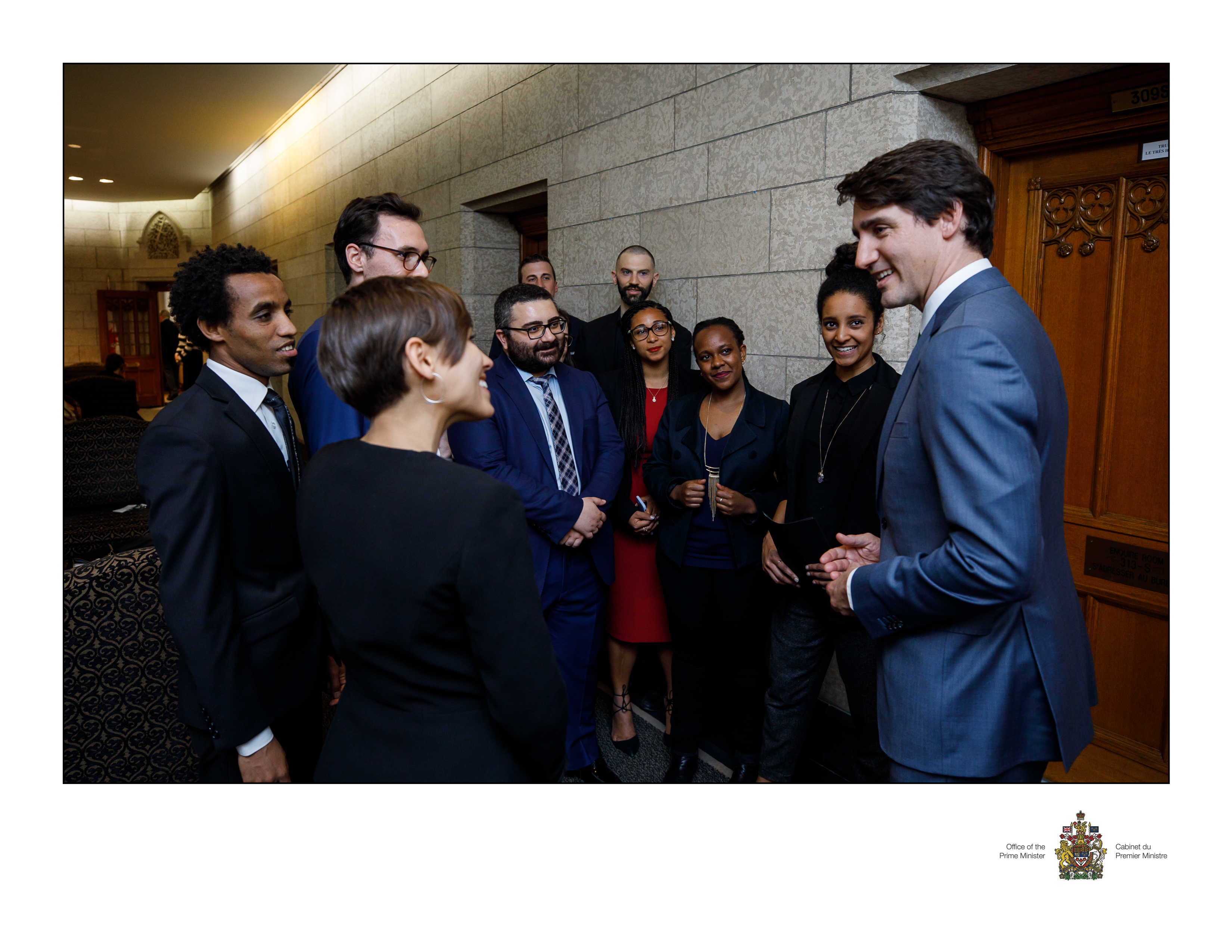
Advocating for social inclusion in the design of smart cities, on our digital platform, we documented the work of Canadian cities as they went through the process of developing applications for the Smart Cities Challenge Canada.

Link here →
Research lines

AI and digitalization

A tech upgrade for development cooperation

The sector can no longer rely on outdated static PDFs for its advisory and programming work. But more than plug-in efficiency tools, the technological disruption requires a complete rethinking of how the sector operates and offers democracy support.

Op-ed Reforming the development sector for agentic AI IDOS Current Column 2026

Digitalization and inclusive economies

Highlights

Recent highlights

Browse all 4 highlights from this portfolio →

Field notes

Latest posts

JUL 2026 · LINKEDIN

I've been in #Geneva since the beginning of the week to represent the German Institute of Development and Sustainability (IDOS) at the inaugural United Nations Global Dialogue on AI Governance and the AI For Good Global Summit. While the #GlobalDialogue presented the first opportunity to convene diverse stakeholders for productive conversations on ensuring regulatory and technical interoperability, instituting safeguards, and building trust, the #AI4Good Summit showcased cutting-edge AI innovations across sectors, including development cooperation.

Read on LinkedIn →
JUN 2026 · LINKEDIN

#Donors pour money into #GovTech expecting a #democratization dividend. #Autocrats are spending just as eagerly on the same tools. At least 88 authoritarian regimes currently run GovTech projects. Electoral autocracies alone receive 48.6% of GovTech aid commitments. Someone must be off the mark. In our recent policy brief, our experimental evidence with Armin von Schiller suggests that efficiency-enhancing GovTech does not just make services faster. When it is paired with sophisticated regime communication, it can durably entrench autocratic rule.

Read on LinkedIn →
MAY 2026 · LINKEDIN

Development cooperation is closer to the #AI frontier than people assume. We are following it carefully at the German Institute of Development and Sustainability (IDOS). In collaboration with UNDP and DW Akademie, we are launching the Depolarization Toolkit: an AI-powered assistant with a multi-agent architecture, designed for practitioners working on depolarization. The toolkit provides vetted knowledge on #polarization through a conversational interface that generates adaptive, context-sensitive content.

Read on LinkedIn →
MAY 2026 · LINKEDIN

I was in #Berlin last week for a series of meetings, but the main occasion was the German Marshall Fund of the United States' panel with the Alfred Landecker Foundation on the implications of shifting #geopolitics for the #transatlantic alliance. As you may suspect, I immediately fired off a question on EU dependence on US compute and #AI foundation models, and what it means for #EuropeanSecurity.

Read on LinkedIn →
MAY 2026 · LINKEDIN

Agentic #AI is arriving in development cooperation before the sector is ready to adopt and govern such a rapidly evolving and increasingly autonomous technology. My latest column on the topic. This is the hard question to answer for international cooperation. The Federal Ministry for Economic Cooperation and Development (BMZ) has already done some groundwork and can play a leadership role in the development sector's technological transformation, as Germany is the top #donor among DAC countries.

Read on LinkedIn →

Browse all 9 posts from this portfolio →

Bridges

From the other portfolios

01 · 3 shared

(Countering) authoritarian propaganda

  • E-government tools, authoritarian propaganda, and regime support
  • Reality check on donor expectations: do GovTech initiatives help autocrats?
  • Countering information pollution to protect democracy